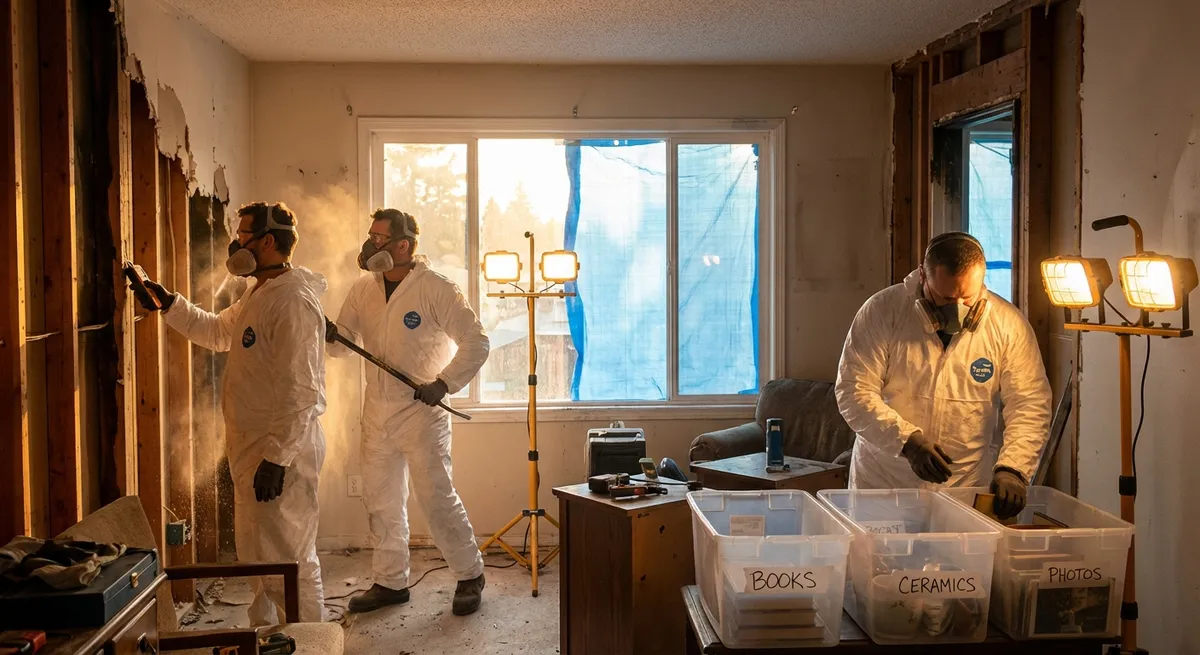
Start With a Forensic Walkthrough, Not a Shopping List
Professionals begin a restoration project the way an investigator approaches a crime scene: methodical, curious, and skeptical of first impressions.
Walk the entire property—inside, outside, attic, crawlspace, and basement—before you commit to any plan. Don’t just note what is obviously broken; look for patterns. Stains on ceilings may indicate roof leaks, but their shape and location can also reveal condensation issues or plumbing defects. Cracked tile might be less about impact damage and more about subfloor movement or moisture.
Document everything with photos and short notes room by room. Capture:
- Sources of moisture (past or present): stains, efflorescence on masonry, soft drywall, warped baseboards, bubbled paint.
- Structural clues: sagging floors, doors that don’t latch, wall cracks that widen or travel across multiple surfaces.
- Mechanical red flags: corroded supply lines, rusted HVAC components, old electrical panels, ungrounded outlets.
- Envelope vulnerabilities: failing caulk, gaps at siding penetrations, damaged flashing, missing kick‑out flashing at roofs meeting walls.
From there, map what’s “cause” and what’s “symptom.” Professionals resist the urge to patch symptoms. If you repair drywall and repaint without resolving the roof leak, the “restoration” is cosmetic and short‑lived. A forensic walkthrough gives you a hierarchy of work: address causes first (water entry, structural movement, system failures), then treat finishes as the final step, not the cure.
1. Stabilize the Building Before You Beautify It
In professional restoration, structural and environmental stabilization comes before any aesthetic work. It’s the difference between building on bedrock and building on sand.
Control Moisture as the First Priority
Water—liquid and vapor—is the primary enemy of buildings. Before any serious repair:
- Stop active leaks: roof penetrations, plumbing joints, failing window/door flashings, foundation cracks.
- Dry what’s wet: use dehumidifiers, fans, and in serious cases, professional drying equipment with moisture meters to verify when materials are truly dry, not just “feels dry.”
- Remove non‑salvageable materials: insulation, carpet, and drywall that have been saturated beyond 24–48 hours (especially in organic materials) can harbor mold and should generally be removed following EPA mold remediation guidance.
If your climate has high humidity, consider whole‑house or crawlspace dehumidification as part of the restoration, not an optional “upgrade.” Professionals know that a beautiful renovation in a humid, poorly controlled home will quickly degrade.
Verify Structural Soundness
Before you upgrade finishes:
- Inspect framing around areas of historic leaks for rot, fungal damage, and insect activity. Probe with an awl or screwdriver; soft, crumbly wood needs replacement, not just consolidation.
- In older homes, check for undersized or altered structural elements—removed joists for plumbing, cut trusses, or “temporary” supports that have become permanent.
- When in doubt, bring in a licensed structural engineer to evaluate sagging, rotation, or settlement. Pros treat structural assessment as cheap insurance against catastrophic callbacks later.
Only once the structure is dry, stable, and supported should you invest in new cabinets, tile, flooring, and paint. This sequence is non‑negotiable in professional work.
2. Specify Materials for Durability, Not Just Style
Homeowners often focus on color, pattern, and trend; professionals focus on material performance in a specific environment. The same product can be a great choice in one home and a mistake in another.
Match Materials to Their Exposure
Ask, “What kind of abuse will this surface see?”
- Wet and high‑humidity areas (bathrooms, laundry, basements):
- Use cement board or fiber‑cement backer in wet zones, never standard drywall in shower surrounds.
- Choose porcelain tile over soft, porous stone for easier maintenance and better water resistance.
- Use vapor‑retarder paints where appropriate and avoid creating double vapor barriers that can trap moisture in walls.
- High‑traffic areas (entries, kitchens, stairs):
- Opt for high‑quality, durable flooring—site‑finished hardwood with robust finish, high‑grade LVP, or porcelain tile—over cheap laminates that swell with minor moisture.
- Use scuff‑resistant paints (e.g., high‑quality matte or eggshell formulated for high traffic) and durable, cleanable trim enamels.
- Exterior elements (siding, trim, decks):
- Choose materials appropriate for your climate—fiber‑cement or engineered wood in termite‑prone or very wet regions, properly treated lumber for ground‑contact applications, and verified corrosion‑resistant fasteners.
Think in Systems, Not Single Products
Professionals rarely consider materials in isolation. They specify assemblies:
- In showers: a properly sloped pan, continuous waterproofing membrane, compatible thinset and grout, and appropriate sealants at change‑of‑plane joints—not grout packed into corners that will crack.
- In roofs: underlayments rated for local climate, correct flashing, appropriate ventilation and intake, and compatible sealants.
- In walls: sheathing, water‑resistive barrier (WRB), flashing tape, cladding, and ventilation details that work together to manage bulk water and vapor.
When planning your restoration, document each assembly like a mini “recipe”: which products are used, how they overlap, and what manufacturer instructions require. Deviating from that is where most DIY restorations fail early.
3. Upgrade the Building Envelope While Things Are Already Open
Restoration often means walls, ceilings, or floors are opened up. Professionals leverage this disruption to improve comfort, efficiency, and resilience—upgrades that would be expensive or invasive to do later.
Improve Insulation and Air Sealing
With framing exposed:
- Seal air leaks first: around top and bottom plates, penetrations (plumbing, electrical, HVAC), and gaps at window and door rough openings. Use sealants, gaskets, and appropriate foam instead of stuffing everything with fiberglass.
- Check insulation type and install quality: compressed, poorly cut, or missing batts perform far worse than their rated R‑value. Upgrade to higher R‑values where possible and ensure complete coverage without gaps or voids.
- Consider strategic use of spray foam or rigid foam to improve thermal breaks and reduce condensation risks in problem areas (rim joists, band boards, certain roof assemblies), following local code and fire safety requirements.
Address Windows, Doors, and Flashing Details
Open walls are the ideal time to correct water‑management details that were never done right:
- Re‑flash windows and doors using modern flashing tapes, pan flashing, and shingle‑style layering that sends water out, not in.
- Check for missing or improper head flashing and integrate it with housewrap or WRB according to manufacturer instructions.
- If the budget allows, replace failing or single‑pane windows during restoration, when interior trim and siding are already disrupted.
Professionals treat every open cavity as a chance to reduce future complaints: drafts, cold spots, condensation, and hidden water damage. Align your restoration with this mindset, and you’ll add unseen value that you feel every day.
4. Coordinate Mechanical, Electrical, and Plumbing Like a Project Manager
Many “restored” homes hide a patchwork of mechanical work: new PEX next to brittle galvanized pipe, modern circuits tied into undersized panels, oversized HVAC hanging off undersized ductwork. Pros coordinate MEP (mechanical, electrical, plumbing) as a fully integrated system, not as three separate trades working in silos.
Evaluate Capacity, Not Just Condition
Before you replace a fixture or add a room:
- Electrical: Confirm that the service panel has adequate capacity (amperage and breaker spaces) for modern loads—HVAC, EV chargers, induction ranges, or additional circuits. Check for aluminum branch wiring, ungrounded circuits, and lack of GFCI/AFCI protection where codes now require them.
- Plumbing: Look beyond visible pipes. Identify galvanized, polybutylene, or other problematic materials and consider strategic repiping while walls are open. Evaluate water pressure, water heater capacity, and placement relative to new bathrooms or laundry rooms.
- HVAC: Have a licensed contractor perform proper load calculations (not just “like for like” replacement). Undersized or oversized systems both create comfort and moisture problems. Check duct design, sealing, and insulation—poor ducts can ruin the performance of even the best equipment.
Sequence Work to Minimize Rework
Professionals carefully schedule MEP work relative to framing, insulation, and finishes:
- Rough‑in all mechanical, electrical, and plumbing with future needs in mind (extra conduits, shutoff valves, drain provisions).
- Inspect and pressure test critical systems (e.g., new water lines, gas lines, and ducts) before insulation or drywall.
- Photograph open walls with measurements to create a “behind the walls” record. This becomes invaluable when you or a future owner need to drill, hang, or modify later.
- Only then close walls, insulate, and start finishes.
Taking this disciplined approach avoids the dreaded scenario of cutting open brand‑new drywall to fix what could have been addressed during rough‑in.
5. Finish With a Maintenance Blueprint, Not Just a Final Walkthrough
Restoration isn’t truly complete when the last coat of paint dries. Professionals design their work so it can be maintained, inspected, and serviced without drama—and then they communicate that plan clearly.
Make Everything Serviceable
As you plan your restoration:
- Ensure access panels for key shutoffs: main water, specific fixture shutoffs (especially in concealed areas), cleanouts, and attic or crawlspace entries.
- Avoid burying junction boxes, splice points, or critical valves behind permanently sealed surfaces.
- Consider removable panels for tubs, tiled shower valves (where code allows), and whirlpool or pump equipment.
Accessibility is not laziness; it’s professional foresight. Future repairs are inevitable—your job is to make them straightforward instead of destructive.
Create a Home Systems Log
Document the restoration as if you were preparing it for a future buyer—or for a future version of yourself who won’t remember every detail:
- Record product information: brands, model numbers, serial numbers, color codes, grout colors, and paint formulas.
- Keep manuals, warranties, and digital receipts stored together (cloud and printed binder).
- Note shutoff locations, panel schedules, filter locations, and replacement intervals.
- Create a simple maintenance calendar: roof inspections, gutter cleaning, HVAC filter changes, caulking checks at wet areas, and exterior paint inspections.
Professionals know that even the most robust restoration will fail if neglected. A clear, written maintenance blueprint turns your restoration from a one‑time project into a managed system with predictable upkeep.
Conclusion
Professional‑grade restoration is less about fancy finishes and more about disciplined priorities: stabilize the structure and environment, choose materials for performance, upgrade the envelope while it’s open, coordinate mechanical systems intelligently, and leave behind a home that’s designed to be maintained. When you approach your damaged or aging home with this mindset, every decision—from the screws you use in your subfloor to the way you flash a window—contributes to a longer‑lasting, safer, and more comfortable place to live.
Think of your next restoration not as “fixing what broke,” but as an opportunity to rebuild smarter than before. That’s how professionals turn setbacks into long‑term upgrades.
Sources
- U.S. Environmental Protection Agency – Mold Remediation in Schools and Commercial Buildings - Authoritative guidance on moisture control, drying, and mold remediation practices that apply directly to water‑damaged homes
- U.S. Department of Energy – Insulation and Air Sealing - Detailed information on insulation types, proper installation, and the importance of air sealing during restoration
- Building America Solution Center – Building Envelope Guides - Research‑backed best practices for wall, roof, and foundation assemblies, including flashing, WRBs, and moisture management
- National Institute of Building Sciences – Whole Building Design Guide - Comprehensive reference on building envelope design and performance, useful when upgrading exterior systems during restoration
- U.S. Consumer Product Safety Commission – Home Electrical Safety Checklist - Practical guidance on residential electrical safety issues to consider when updating or restoring electrical systems