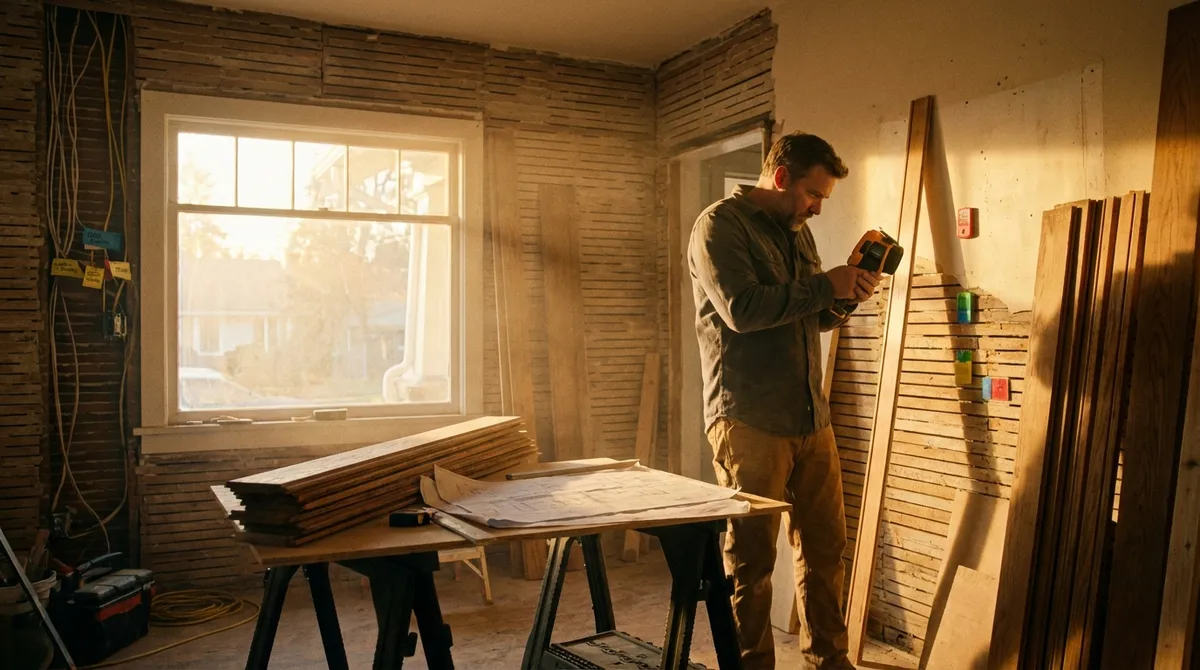
This guide walks through five professional-level restoration and renovation tactics that go beyond “pretty” and into long-term value, durability, and safety. Use these insights to talk to contractors more confidently, avoid expensive rework, and plan projects that stand up to time, weather, and daily life.
1. Start With Your Home’s “Systems Map,” Not a Design Mood Board
Most projects fail early—before anyone swings a hammer—because the homeowner jumps straight into finishes and inspiration photos. Professionals start with a systems map: a clear picture of how your house actually works.
A systems map looks at structure, mechanicals, moisture, and utilities as a single interconnected ecosystem. Before planning a kitchen or bath, pros want to know: Where are the load-bearing walls and beams? How does air and moisture move through the building envelope? What’s the capacity and age of your electrical panel, plumbing supply, and drainage? Are there known problem zones—ice dams, basement seepage, recurring drywall cracks?
Create your own simplified systems map before committing to design choices:
- Structure: Identify load-bearing walls, major beams, and known structural repairs. Old permit records (if available) and a structural engineer’s visit for older or modified homes are worth the cost.
- Mechanical systems: Document age, type, and location of your HVAC, water heater, main electrical panel, and key shutoff valves. Note any rooms that are consistently too hot/cold or slow to get hot water.
- Moisture and drainage: Walk the exterior after a heavy rain. Note where water pools near the foundation, where downspouts discharge, and any staining on exterior walls or soffits.
- Insulation and air sealing: If possible, inspect attic and crawlspaces. Look for missing insulation, visible gaps around penetrations, and signs of condensation.
Why this matters: once you understand the constraints and weaknesses of the existing systems, you can sequence your renovation to fix root issues while you’re already opening walls and floors. That’s how pros avoid paying twice—once for the pretty renovation, and again to repair hidden problems later.
2. Treat Moisture Management as a Non-Negotiable Design Constraint
Professional restorers know there are two main enemies of a building: water and time. Time is inevitable; water is controllable. Every decision—from tile selection to wall assemblies—should be filtered through one question: “What happens when this gets wet?”
In kitchens, baths, basements, and exterior walls, assume moisture will find a way in through splashes, condensation, minor leaks, or vapor drive. Instead of aiming for “never wet,” design for “manages wet safely.”
Key pro-level practices:
- Prioritize drainage before waterproofing. On exteriors and in basements, ensure water is directed away from the building first: grade that slopes away from the foundation, extended downspouts, and properly sloped hardscapes. Waterproof coatings or membranes are backups, not the primary solution.
- Choose assemblies that dry, not just resist water. In walls and floors, consider how trapped moisture can escape. For example, in below-grade basements, pros often combine drainage mats, vapor barriers, and insulation that won’t hold water (like rigid foam) instead of relying on standard fiberglass batts.
- Ventilation is as important as finishes. In baths and kitchens, specify quiet, adequately sized exhaust fans vented fully outdoors (not into an attic). Use timer switches or humidity-sensing controls to ensure consistent use. For smaller, tight homes, a whole-house ventilation strategy may be warranted.
- Respect building science for your climate. The right vapor retarder location and insulation strategy depends on whether you’re in a heating-dominant, cooling-dominant, or mixed climate. What works in Arizona can cause hidden mold in Maine.
This moisture-first mindset may slightly alter your finish options and details (for example, preferring a curbless shower pan properly sloped with continuous waterproofing over a basic “tile on top” install), but it massively increases durability and reduces long-term repair costs.
3. Design for Future Access: Make Repairs and Upgrades Cheaper Before You Need Them
Professionals think about the next person who will work on the home—perhaps a plumber in 10 years, an electrician in 20, or you replacing a built-in appliance. The goal is to reduce the friction and cost of future interventions by planning access from day one.
Most homeowners accidentally build “future problems” into their renovations: buried junction boxes, tiled-over cleanouts, sealed chases, or HVAC equipment crammed into inaccessible corners. Pros fight this tendency.
Practical, pro-inspired strategies:
- Service pathways over perfect symmetry. When laying out kitchens, mechanical rooms, and utility spaces, allow room to remove and replace appliances and equipment without demolition. That might mean oversized doors, removable panels, or a slightly less tight cabinet layout.
- Access panels in the right places. Identify key “service nodes”: shower valves, cleanouts, shutoff valves, junction boxes, and condensate pumps. Integrate discrete, finished access panels (painted to match, hidden behind removable trim, or cleverly placed in closets) where it makes sense.
- Consolidate and label critical shutoffs. Ensure the main water shutoff, gas shutoff (if applicable), and key circuit breakers are clearly labeled and reasonably accessible, not buried behind storage or hard-to-move fixtures. Add clear labeling on both panels and valve tags.
- Plan for likely upgrades. Running new circuits for future EV chargers, adding conduit for potential solar connections, oversizing chases for future low-voltage or data cabling—these are low-cost during a renovation and high-cost later.
The payoff is compound: easier maintenance, faster emergency repairs, and a home that’s easier to own—and to sell. Seasoned inspectors, buyers, and tradespeople all notice when a house has been restored with access in mind.
4. Align Structural Changes With Load Paths, Not Just Floor Plans
Removing a wall or opening a ceiling seems simple on paper, but pros know that structure is more than “this wall is load-bearing” or “this one isn’t.” The real concept to understand is load paths—how weight travels from your roof and floors down to the foundation.
Every time you alter framing, you’re either respecting or disrupting that path. Professional restorers coordinate structural changes as a coherent strategy, not as isolated “one-off” openings.
How to think more like a pro when planning structural changes:
- Identify global patterns, not just local walls. Look for alignments: stacked walls between floors, beams that continue across rooms, and repetitive joist layouts. Changes should complement these patterns, not fight them.
- Respect lateral and shear elements. Especially in seismic or high-wind regions, some walls do more than carry gravity loads—they resist sideways forces. Removing, perforating, or heavily altering these without engineered replacements can quietly weaken the entire structure.
- Use engineered solutions, not “rule of thumb” fixes. LVLs (laminated veneer lumber), steel beams, flitch plates, and properly designed posts and footings allow for open concepts while maintaining structural integrity. A structural engineer’s fee is small relative to the risk of sagging floors, cracked finishes, or, in worst cases, structural failure.
- Coordinate structure with mechanicals. Pros don’t let plumbers or HVAC crews improvise structural notches and holes later. They pre-plan where ducts, pipes, and chases will go so that structural members aren’t hacked apart on the fly.
Whenever you imagine “opening this up,” pair that thought with “how will loads travel after the change, and who’s designing that solution?” That mindset is exactly how seasoned restoration pros protect both safety and your investment.
5. Build a Performance Baseline and Measure Progress, Not Just Appearances
A home that looks restored but still feels drafty, unevenly heated, noisy, or damp isn’t actually performing well. Professionals are increasingly using diagnostic tools before and after projects to quantify improvements and avoid guesswork.
Even as a homeowner, you can bring a performance-based approach into your restoration:
- Conduct a pre-project energy and comfort assessment. Consider a blower door test to identify air leakage, along with infrared imaging to see missing insulation and thermal bridges. These tests guide targeted sealing and insulation upgrades while cavities are open.
- Benchmark indoor air quality (IAQ). Simple monitors for CO₂, humidity, particulate matter (PM2.5), and VOCs can reveal hidden issues—poor ventilation, combustion byproducts, or off-gassing from old materials. Use the data to justify better ventilation, filtration, and material choices.
- Set clear performance goals. Instead of “make the basement less musty,” aim for “keep RH between 40–50% year-round and reduce outside air leakage by 30%.” Then choose strategies—drainage improvements, air sealing, dehumidification—that you can actually verify.
- Verify after the work. Re-running blower door or IAQ tests after restoration lets you confirm whether investments in air sealing, insulation, and mechanical upgrades are delivering results. This feedback loop is how pros refine their methods.
By treating performance measurements as part of your restoration toolkit—not a luxury—you push the project beyond surface-level upgrades. Over time, this approach reduces utility bills, improves comfort, and protects your building envelope and finishes from premature failure.
Conclusion
Professional-level restoration isn’t about secret tricks; it’s about priorities and sequence. Pros start with a systems map rather than a mood board, design around moisture and access rather than just aesthetics, respect load paths instead of improvising structure, and measure performance instead of trusting appearances.
As a homeowner, you don’t have to become a contractor or engineer to benefit from this mindset. Use these five tactics to ask better questions, demand better details, and coordinate your team around long-term performance. The result is a home that not only looks restored today but acts like a well-designed, resilient system for decades to come.
Sources
- U.S. Department of Energy – Building Envelope & Moisture Management – Guidance on air sealing, moisture, and building envelope performance
- U.S. EPA – Indoor Air Quality Basics for Homes – Overview of IAQ issues and strategies relevant to renovation and restoration
- U.S. Department of Housing and Urban Development (HUD) – Residential Rehabilitation Guide – Technical resources and best practices for residential rehabilitation projects
- FEMA – Home Builder’s Guide to Coastal Construction (Load Paths & Structural Considerations) – Detailed discussion of continuous load paths and structural design (applicable concepts beyond coastal zones)
- Penn State Extension – Water Management and Drainage Around Homes – Practical guidance on grading, drainage, and moisture control near foundations