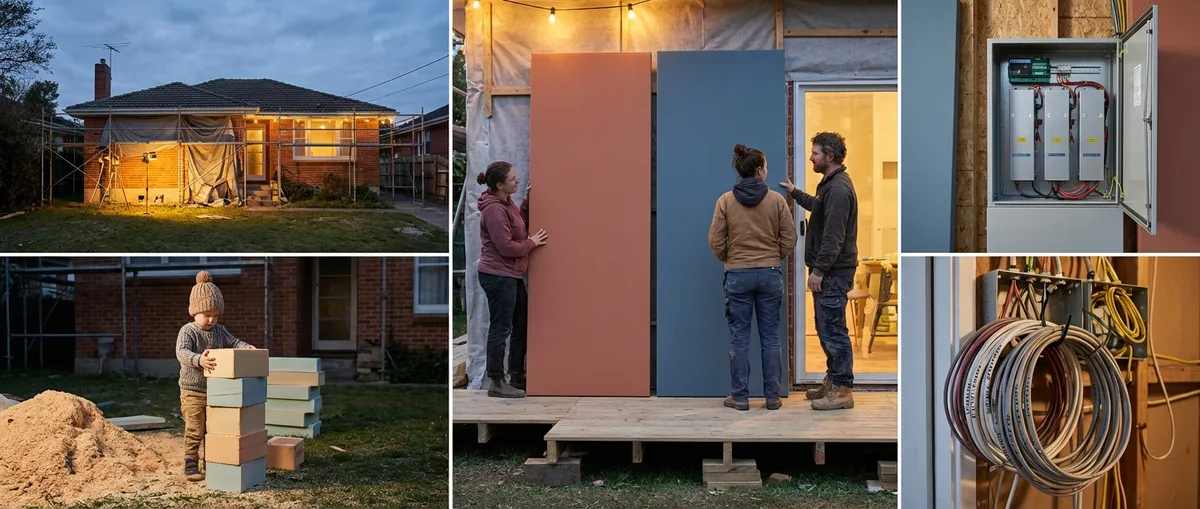
Start With the Building Envelope, Not the Kitchen
Most homeowners instinctively start renovations from the inside out: kitchens, baths, finishes. Professionals reverse that thinking and start with the building envelope—the shell that separates indoors from outdoors.
Your building envelope includes the roof, exterior walls, windows, doors, foundation, and all the layers that control heat, air, and moisture. Get this wrong, and your beautiful new kitchen can end up with peeling paint, warped cabinets, or mold within a few seasons.
Key steps and concepts:
- Assess water management first. Look at roof condition, gutters and downspouts, grading around the foundation, and signs of past leaks (staining, efflorescence, soft wood). Any new interior work should wait until bulk water issues are solved.
- Understand the control layers. Every exterior assembly needs four things: a water control layer, an air control layer, a vapor control strategy, and insulation. These must be continuous and compatible; random patches of “fixes” usually create new problems.
- Avoid trapping moisture. Adding insulation without thinking about where vapor can safely move often leads to hidden condensation. This is especially critical in older homes originally built to “breathe” through leaky assemblies.
- Prioritize roofs and basements/crawlspaces. That’s where the most significant moisture and durability threats usually live. Stabilize top and bottom before investing heavily in finishes.
- Sequence your projects. If you’re planning new siding in three years, don’t install high‑end interior wall finishes on the same walls today. Use temporary or modest finishes until the envelope work is complete.
Professionals view the envelope as the foundation for every other renovation decision. Once it’s dry, tight, and thermally managed, all your visible improvements last longer and perform better.
Tip 1: Use Diagnostics, Not Guesswork, to Find Hidden Problems
A pro renovation is data‑driven. Rather than relying on assumptions, contractors use building diagnostics to understand how a house actually performs and where it’s failing. Homeowners can access many of the same tools and services.
Key diagnostic tools and techniques:
- Blower door testing. A calibrated fan depressurizes the house to measure overall air leakage and pinpoint drafts. This reveals where heat is escaping, where moisture‑laden air is entering, and which areas should be sealed first for best impact.
- Infrared (thermal) imaging. A thermal camera quickly shows missing insulation, thermal bridges, and sometimes active leaks behind walls and ceilings. Used during a blower door test, it can reveal air leakage paths in real time.
- Moisture meters and hygrometers. These assess moisture content in wood and drywall, and track indoor humidity levels. Persistently high readings point to hidden leaks or inadequate ventilation.
- Combustion safety testing. If you have gas or oil appliances, a professional should test for proper draft and check for back‑drafting risks before you tighten the building envelope.
- Camera inspections for plumbing and drains. Especially in older homes, scoped inspections of underground lines and concealed drains can prevent disastrous surprises after you remodel.
How to integrate diagnostics into your renovation:
- Do a baseline audit early. Before planning finishes, bring in a home performance contractor or energy auditor for a comprehensive assessment.
- Use findings to prioritize scope. Address the most critical safety and durability issues first (structural concerns, water intrusion, combustion safety), then energy and comfort, then aesthetics.
- Re‑test after major work. If you’ve air‑sealed, insulated, or replaced HVAC, a follow‑up blower door test and system commissioning confirm that the house is performing as intended.
This diagnostic-first mindset shifts renovation from guesswork to evidence-based decisions, saving money and preventing costly rework.
Tip 2: Build Moisture Management Into Every Design Decision
Moisture is the primary enemy of building durability. Professional restorers treat water—liquid, vapor, and even trapped humidity—as the starting point for every design choice, from materials to mechanical systems.
Core moisture‑management principles:
- Keep bulk water out. This means well‑installed roofing, properly detailed flashing around windows and doors, kick‑out flashing where roofs meet walls, and continuous drainage planes behind siding and cladding.
- Let assemblies dry in at least one direction. If you’re adding vapor‑tight materials (like some paints, foils, or vinyl wallcoverings), make sure the wall or roof can still dry either inward or outward. Avoid “double vapor barriers” that trap moisture.
- Control indoor humidity. Target 30–50% relative humidity in most climates. Above that, you increase the risk of mold, dust mites, and condensation on cold surfaces. Below that, you may experience comfort and health issues.
- Ventilate where moisture is generated. Kitchens, bathrooms, laundry rooms, and basements should have effective, vented exhaust (not recirculating) that’s actually used. Consider continuous or timed ventilation in tight homes.
- Choose tolerant materials for riskier zones. In basements, consider moisture‑resistant insulation, masonry‑friendly coatings, and inorganic finishes where possible. In wet rooms, use cement board—not standard drywall—behind tile.
Examples of moisture‑savvy renovation choices:
- Basement remodels that start with exterior drainage improvements, sump systems where needed, and insulating the foundation in a way that doesn’t encourage condensation.
- Bathroom upgrades that include right‑sized, quiet exhaust fans on timers or humidity sensors, with ducts that terminate outdoors—never in attics.
- Window replacements that integrate with an existing drainage plane and include pan flashing and head flashing, rather than relying solely on caulk.
Thinking like water—where it comes from, where it wants to go, and how it can get out safely—will protect your investment more than almost any other design strategy.
Tip 3: Treat Energy Efficiency and Comfort as Structural Upgrades
Energy performance isn’t just a “green” add‑on; it affects comfort, durability, and long‑term operating costs. Pro renovators increasingly treat insulation, air sealing, and right‑sized mechanical systems as core structural upgrades, not optional extras.
Key performance upgrades to prioritize:
- Air sealing before insulating. Stopping uncontrolled air movement often delivers bigger comfort gains than simply adding R‑value. Tackle major leakage points: attic hatches, plumbing and wiring penetrations, recessed lights, rim joists, and top plates.
- Targeted, continuous insulation. Aim for continuous layers over structural framing where possible (e.g., rigid exterior insulation, insulated sheathing, or continuous attic insulation over top of joists) to reduce thermal bridging.
- High‑performance windows and doors. Replacing failing units with low‑U‑factor, low‑E, well‑sealed units can dramatically reduce drafts and cold spots. Installation quality matters as much as the product.
- Right‑sized HVAC. Many older systems are oversized, leading to short cycling, uneven temperatures, and poor humidity control. A proper Manual J load calculation (not rule-of-thumb sizing) should guide any new system.
- Duct design and sealing. Ducts outside the conditioned envelope (attics, crawlspaces, garages) waste energy and create pressure imbalances. Seal and, where possible, relocate or redesign them.
Benefits you’ll notice day‑to‑day:
- Fewer cold or hot spots in rooms distant from the thermostat
- Quieter HVAC operation and fewer on/off cycles
- Lower utility bills and a smaller carbon footprint
- Less dust and fewer drafts
- Often, better indoor air quality when efficiency upgrades are paired with appropriate ventilation
When you think of these measures as “comfort structure”—as fundamental as framing and roofing—your renovation decisions become more strategic and less cosmetic.
Tip 4: Plan for Adaptability—Design Spaces That Can Evolve
The most valuable renovations are the ones that won’t need to be ripped apart when your life, technology, or building codes change. Professionals increasingly design for adaptability: spaces and systems that can evolve with minimal disruption.
Strategies for adaptable design:
- Serviceable infrastructure. Run mechanicals, plumbing, and wiring where they’ll remain accessible (chases, soffits, mechanical rooms) instead of burying everything behind finished surfaces. Use access panels in key locations.
- Flexible floor plans. Avoid over‑specializing spaces. Opt for rooms that can easily switch between home office, guest room, or hobby space with minimal changes to walls and services.
- Future‑ready wiring. Oversize conduit and add extra low‑voltage runs (data, sensor, security) while walls are open. Even if you don’t need them now, it’s inexpensive insurance against future tech upgrades.
- Subfloor and framing robustness. Slightly upgrading framing or subfloor thickness in high‑traffic areas makes it easier to refinish or reconfigure without structural concerns.
- Accessible design basics. Incorporate at least some universal design elements—wide doorways, blocking in bathroom walls for future grab bars, minimal thresholds, adaptable lighting controls—to accommodate changing mobility needs.
Concrete examples:
- When renovating a bathroom, you might use a curbless shower and add blocking behind walls for future grab bars, even if you don’t install them now.
- In a kitchen, you could design base cabinets so some can be removed later to create seated work areas if needed.
- In finished basements, you might keep mechanicals grouped in an accessible zone and plan partitions so walls can be moved without reworking major systems.
This kind of forward‑thinking doesn’t just support aging in place; it also makes your home more appealing to future buyers with different needs.
Tip 5: Coordinate Aesthetics With Performance—Not Against It
Beauty and performance often clash when renovations are planned purely from a design perspective. Professionals understand that the best results come when appearance and building science inform each other from the start.
Ways to align aesthetics and performance:
- Choose finishes that complement the building’s behavior. For example, in older masonry homes, vapor‑permeable paints and plasters allow walls to dry, whereas impermeable coatings can trap moisture and cause spalling or blistering.
- Use trim and detailing to hide performance upgrades. Deep window jambs from added exterior insulation can be turned into attractive architectural features. Interior soffits can conceal ductwork or chases while defining spaces.
- Respect the building’s original style where it matters. Restoring or replicating certain character elements (e.g., window proportions, trim profiles, roof overhangs) can coexist with upgraded materials and modern assemblies.
- Think about daylighting as a performance tool. Window placement, shading, and reflectance of interior finishes can reduce lighting needs and manage solar gain, improving comfort while enhancing visual appeal.
- Plan for maintenance. A gorgeous but high‑maintenance material that fails in your climate or exposure zone isn’t really beautiful long‑term. Evaluate UV resistance, moisture tolerance, and realistic care requirements.
Practical examples:
- When re‑siding, you might select a rain‑screen assembly behind the siding—improving drying and durability—while using historically appropriate profiles and colors.
- In a historic home, you can preserve interior millwork but upgrade sash to energy‑efficient glazing or add high‑quality storm windows for performance gains without losing character.
- In modern renovations, you can use minimalist detailing to disguise thicker wall assemblies or mechanical chases, preserving a clean aesthetic.
The goal is a house that looks intentional and cohesive while quietly performing at a much higher level than it did before.
Conclusion
An expert‑level renovation goes far beyond fresh paint and new fixtures. It starts with the building envelope, relies on diagnostics to uncover hidden issues, treats moisture and energy performance as structural concerns, and designs for an adaptable, evolving home. When aesthetics are coordinated with these performance priorities instead of competing with them, you end up with a house that is more comfortable, durable, efficient, and future‑ready.
By approaching your project with this mindset—and applying the five professional strategies outlined here—you transform renovation from a series of isolated upgrades into a comprehensive improvement of how your home works, not just how it looks. That’s the kind of work that pays you back, year after year.
Sources
- U.S. Department of Energy – Energy Saver: Air Sealing Your Home – Detailed guidance on air sealing, common leakage sites, and prioritizing work
- U.S. Environmental Protection Agency – Moisture Control Guidance for Building Design, Construction and Maintenance (PDF) – Comprehensive discussion of moisture management principles and building assemblies
- Building America Solution Center – Building Envelope Guides – In‑depth technical resources on walls, roofs, foundations, and control layers from the U.S. DOE
- U.S. Department of Housing and Urban Development – Residential Rehabilitation Inspection Guide (PDF) – Professional‑grade inspection and rehab guidance for existing homes
- National Institute on Aging – Aging in Place: Growing Older at Home – Recommendations on home modifications and universal design considerations for long‑term adaptability